
Here is something most parents discover too late. The destiny matrix chart you calculate for your child uses the exact same method as the one you calculate for yourself. Same formula. Same octagram. Same 22 arcana. But the way you read it? Completely different.
An adult matrix focuses on karmic lessons, relationship dynamics, financial energy, and life purpose. A child has not lived through decades of accumulated experience yet. Their matrix needs to be read through a developmental lens, one that focuses on temperament, natural talents, emotional needs, and how they learn best.
This guide walks you through how to calculate your child’s destiny matrix step by step, and more importantly, how to interpret it in a way that actually helps your parenting.
How the Calculation Works (It Is the Same for Everyone)
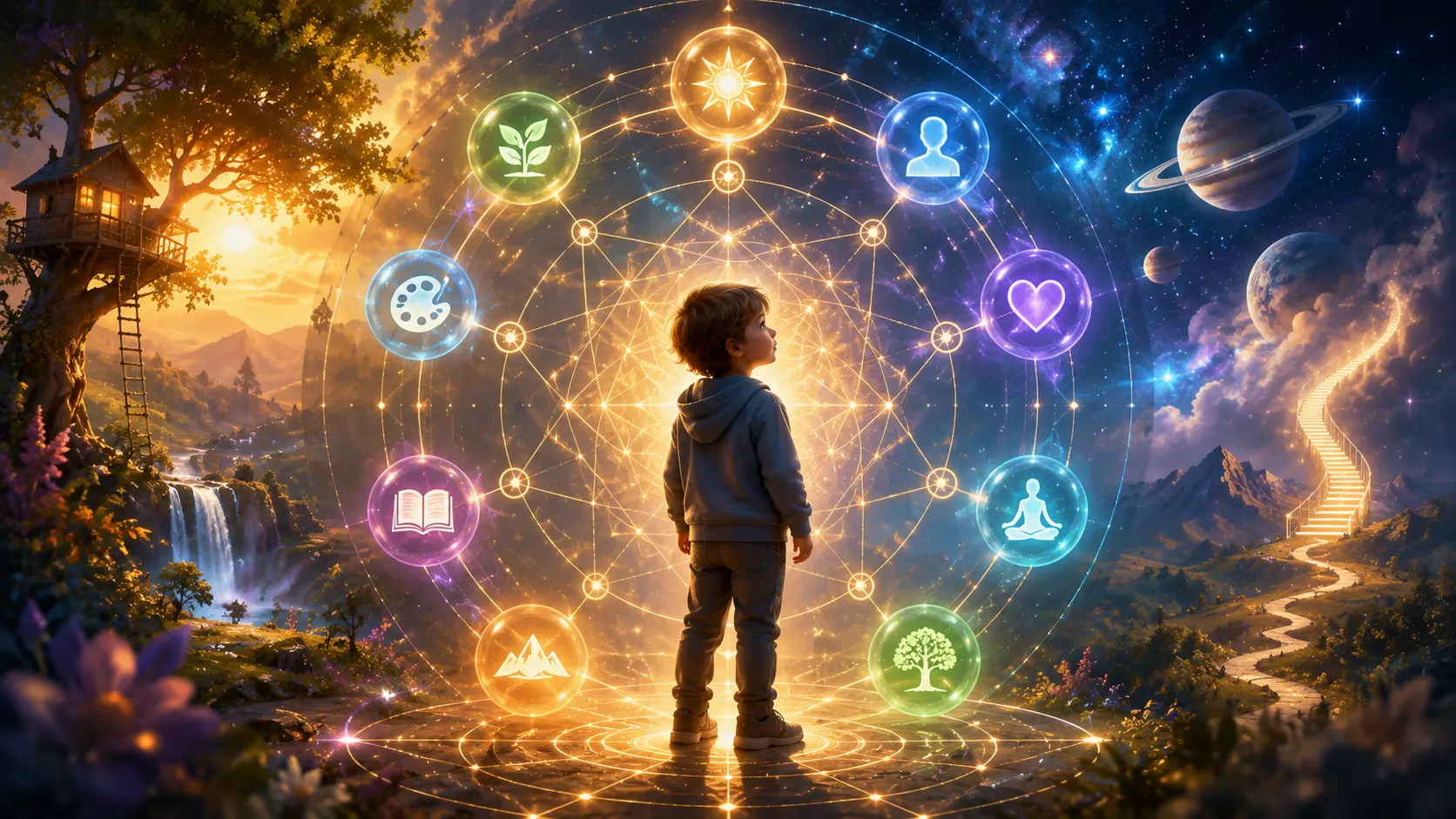
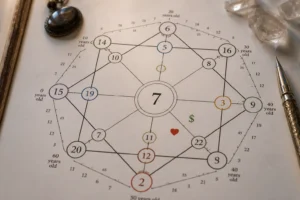
Whether you are calculating a chart for yourself, your partner, or your five year old, the process starts with one piece of information: the full date of birth. Day, month, and year. That is all you need.
The destiny matrix system, developed by Natalia Ladini, uses a specific set of steps to turn that birth date into a chart.
Step 1: Extract the day. Your child’s birth day becomes one of the primary numbers. If they were born on the 15th, the number is 15. If born on the 25th, you reduce it: 2 + 5 = 7. Any number 22 or below stays as it is.
Step 2: Extract the month. The birth month becomes another primary number. January is 1, December is 12. No reduction needed for months since they all fall between 1 and 12.
Step 3: Extract the year. Add the digits of the birth year together. For example, if your child was born in 2019: 2 + 0 + 1 + 9 = 12. The year energy is 12. If the sum exceeds 22, reduce again. For a child born in 2018: 2 + 0 + 1 + 8 = 11. The year energy is 11.
Step 4: Map onto the octagram. These three base numbers are placed at specific positions on the chart. The remaining positions are calculated by adding adjacent numbers together. If any result exceeds 22, subtract 22 from it.
Step 5: Calculate the center number. The center of the chart is derived from combining the day, month, and year numbers. This number represents the core energy of the person and it is the most important number on the entire chart.
That is it. The math is identical whether the person is 5 or 55. What changes is what you do with the results.
If you want a deeper explanation of how the center number works in any chart, our guide to the centre number covers it in detail.
Why a Child’s Matrix Is Read Differently Than an Adult’s

This is the part most people skip, and it is the part that matters most.
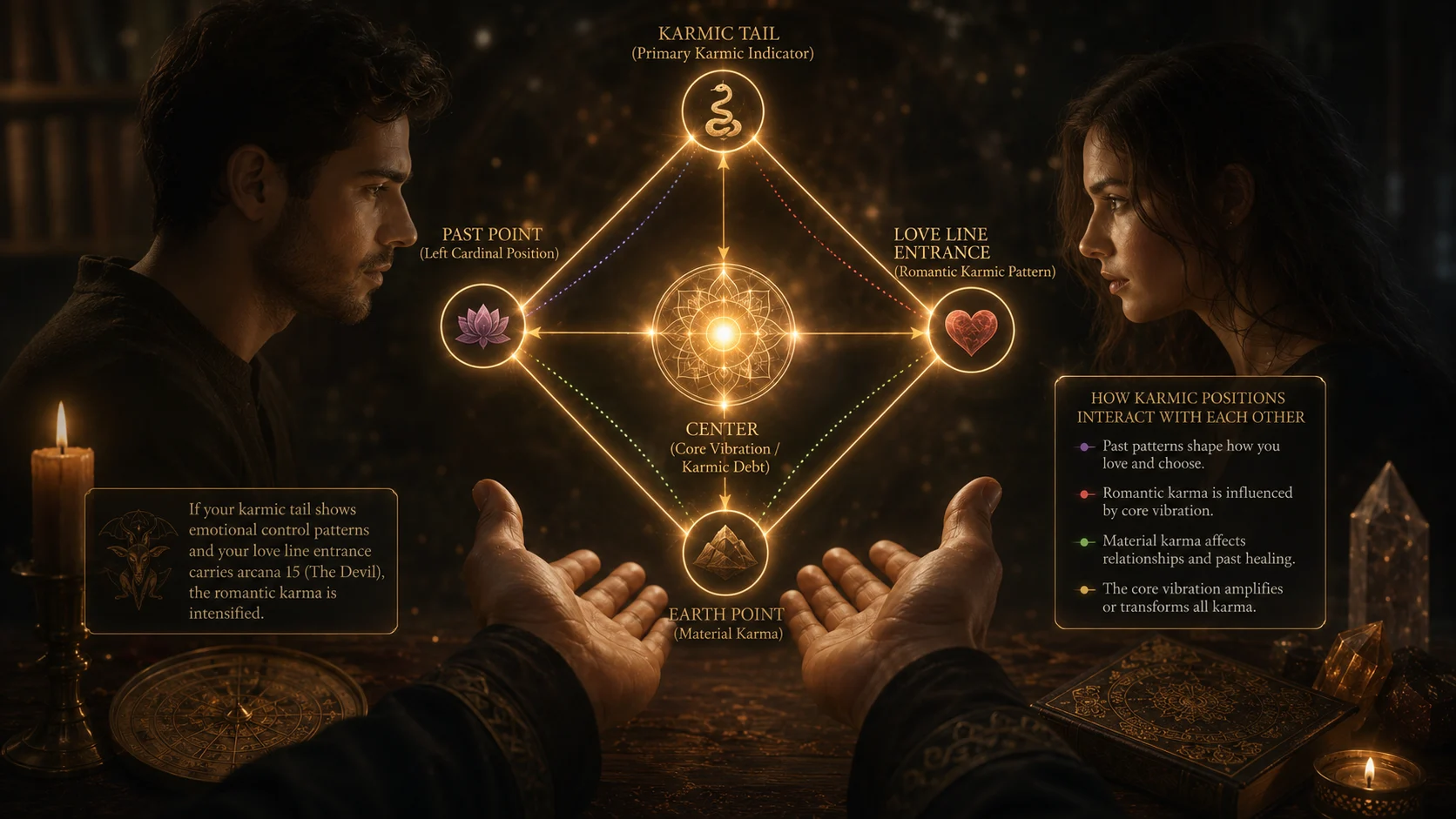
When you read an adult’s destiny matrix, you are looking at patterns that have already played out. The karmic tail shows lessons they have been repeating for years. The love line shows relationship habits that have already formed. The money line reflects a financial mindset that has been developing since early adulthood.
A child has not formed those patterns yet. Their matrix shows potential, not history. It shows what is waiting to emerge, not what has already crystallized. And that distinction changes how you should interpret every single position on the chart.
For a child, the center number is not about “who they have become.” It is about their fundamental temperament. The top position is not about their career calling. It is about the type of activity that energizes them naturally. The karmic tail is not about past life debt they need to repay. It is about emotional tendencies that will surface as they grow and that you, as a parent, can help them navigate early.
The destiny matrix system was designed to map 22 archetypal energies. Each energy has a positive and negative expression. For adults, the negative side often represents years of avoidance or unconscious behavior. For children, the negative side represents vulnerabilities that have not solidified yet, which means you still have time to guide them toward the positive expression before those patterns harden.
That is the real power of reading a child’s destiny matrix. You are not diagnosing problems. You are spotting tendencies early enough to shape them.
Reading the Center Number: Your Child’s Core Temperament
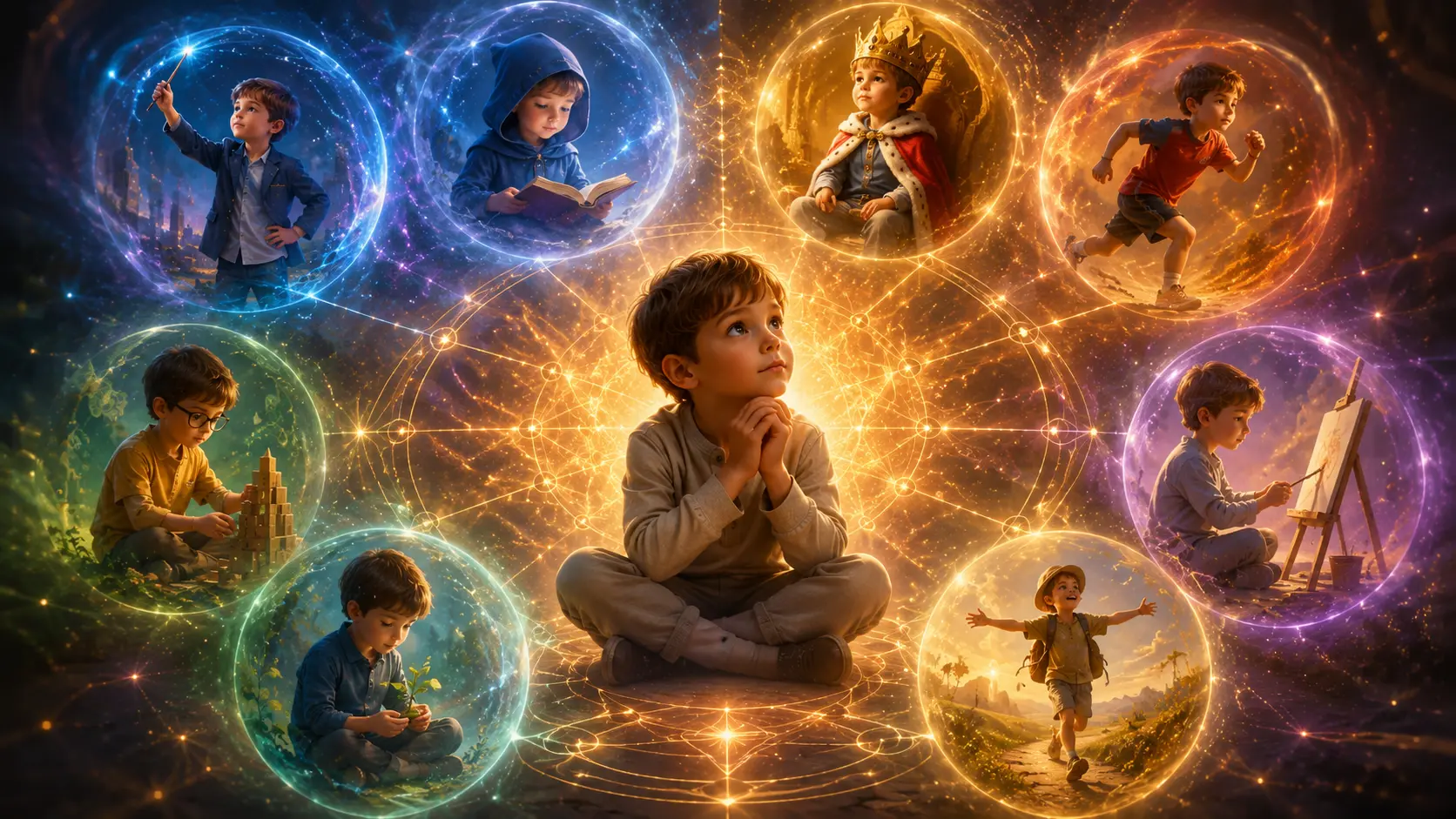
The center number is the heart of the chart. For a child, it defines their default way of being in the world.
Each of the 22 arcana creates a distinctly different temperament. A child with Arcana 1 (The Magician) at their center will naturally gravitate toward leadership, independence, and trying things on their own. They want to do everything themselves, often before they are ready. A child with Arcana 2 (The High Priestess) will be quieter, more observant, and deeply intuitive. They notice things other children miss, but they may not speak up about it unless they feel completely safe.
A child with Arcana 4 (The Emperor) thrives on structure, rules, and clear expectations. Give them a routine and they flourish. Take it away and they feel lost. A child with Arcana 7 (The Chariot) is competitive, driven, and needs to win. They do best when given clear goals and the freedom to chase them.
A child with Arcana 12 (The Hanged Man) processes things slowly and deeply. They are not “behind.” They are thorough. Rushing them creates anxiety. A child with Arcana 22 (The Fool) is spontaneous, playful, and resistant to rigid frameworks. Forcing them into a highly structured environment will feel like putting a bird in a box.
The point here is not to label your child. It is to understand their natural operating system so you can parent in a way that works with their energy instead of against it.
If you are curious about how specific arcana energies function in depth, we have detailed guides on individual numbers like Arcana 9 (The Hermit), Arcana 11 (Strength), and Arcana 8 (Justice).
Reading the Talent Zones: What Your Child Is Naturally Good At
The destiny matrix chart does not just reveal personality. It also identifies which arcana govern your child’s talent zones, showing abilities that may not be immediately obvious but will emerge when given the right encouragement.
The top corner of the chart represents your child’s natural gift. This is the energy that flows easily for them, the thing they gravitate toward without being taught. Some children have a gift in communication (Arcana 3, The Empress). Others have a natural talent for analysis and structure (Arcana 4, The Emperor). Some carry creative or artistic energy (Arcana 17, The Star). Others are natural leaders (Arcana 1, The Magician).
Here is what makes this useful in practice. Parents often push children toward activities based on what the parent values or what seems “practical.” The child’s talent zones might tell a different story.
If your child’s chart shows strong creative energy but you have enrolled them in competitive math programs because “that is where the jobs are,” you might be fighting their natural current. That does not mean they cannot succeed in math. It means their energy will flow more easily and with less resistance in creative pursuits.
This does not replace your judgment as a parent. But it adds a layer of information you would not otherwise have. Think of it as a guide, not a script.
The Karmic Tail in a Child’s Chart: What to Watch For
The karmic tail is one of the most discussed parts of the destiny matrix system. In an adult chart, it represents unresolved patterns from the past that keep repeating. In a child’s chart, the interpretation needs to shift.
For children, the karmic tail highlights emotional and behavioral tendencies that are likely to surface during key developmental stages. These are not fixed problems. They are areas where your child may need extra support, understanding, or gentle redirection.
For example, a karmic tail that includes Arcana 15 (The Devil) energy does not mean your child is doomed to struggle with addiction or control. It means they may be more susceptible to attachment, obsessive tendencies, or difficulty letting go of things. Knowing this early lets you teach them healthy boundaries and emotional regulation before those patterns become deeply rooted.
A karmic tail with Arcana 13 (Transformation) energy might show up as a child who has difficulty with change. Transitions between activities, new schools, or changes in routine might feel disproportionately stressful for them. With awareness, you can prepare them for transitions more intentionally instead of wondering why they react so strongly every time something shifts.
The karmic tail in a child’s chart is not a warning. It is a map of where your child will need the most patience and the most conscious parenting.
How to Use the Love Line and Money Line for a Child
Here is where some parents get confused. The love line and money line exist in a child’s chart, but they need to be reframed entirely.
The love line for a child does not describe romantic relationships. It describes how your child connects emotionally with people in general. How they form friendships. How they express affection. How they handle conflict with peers. A child whose love line carries Arcana 6 (The Lovers) energy may be extremely social and need constant companionship. A child with Arcana 9 (The Hermit) energy in that position may prefer one or two close friends over large groups and need regular alone time to recharge.
The money line for a child does not describe financial habits yet. It describes their relationship with resources, sharing, earning, and the concept of value. A child with Arcana 10 (Wheel of Fortune) in their money line may have a natural comfort with risk and change in how they handle material things. A child with Arcana 4 (The Emperor) in that position may be a natural saver who gets anxious when their belongings are disorganized.
Reading these lines through a developmental lens gives you practical insights you can use right now, without waiting until your child is an adult to see how the patterns play out.
Understanding Why Siblings Are So Different
One of the most valuable uses of the child’s destiny matrix is understanding why siblings raised in the same household can be dramatically different from each other.
Every child has a completely unique energy chart. Even twins born minutes apart share the same chart, but they may express the positive and negative sides of those energies differently based on birth order, temperament, and individual experiences.
A first child with Arcana 4 (The Emperor) at the center and a second child with Arcana 22 (The Fool) at the center will need fundamentally different parenting approaches. The first child wants rules, clarity, and predictability. The second child wants freedom, spontaneity, and room to explore.
Neither approach is wrong. But if you parent both children the same way, one of them will thrive and the other will struggle. The destiny matrix gives you the language and framework to adjust your approach for each child based on who they actually are, not who you expect them to be.
If your family dynamics feel complex, understanding compatibility between family members can also reveal where natural tensions and harmonies exist within your household.
Common Mistakes Parents Make When Reading a Child’s Matrix
Let us be honest about the pitfalls, because they are common and they matter.
Labeling instead of understanding. “My child is a 5, so they are rigid and traditional.” No. Your child carries Arcana 5 energy, which means they value structure and guidance. That is a tendency, not a sentence. The moment you turn a matrix reading into a fixed identity, you have missed the point entirely.
Reading adult interpretations for children. Most arcana descriptions online are written for adults. Reading about the negative expression of Arcana 15 and panicking about your six year old is not productive. Always filter the information through the developmental stage your child is currently in.
Projecting your own chart onto your child. If your center number is 1 (The Magician) and your child’s center is 12 (The Hanged Man), you might unconsciously push them toward action and speed when they need patience and reflection. Your chart is not their chart. Their path is not your path.
Ignoring the positive side. Parents sometimes focus on the shadow expressions because they want to prevent problems. That is understandable. But spending equal time understanding and nurturing the positive expressions is just as important. A child who hears “you have this vulnerability” without hearing “you have this strength” internalizes the wrong message.
Treating the matrix as a prediction. The destiny matrix is a tool for understanding energy, not a script for how life will unfold. Your child’s choices, environment, and your parenting will all shape how these energies express themselves. The chart shows potential directions. You and your child decide which ones to follow.
Practical Tips for Parents Using the Child Destiny Matrix
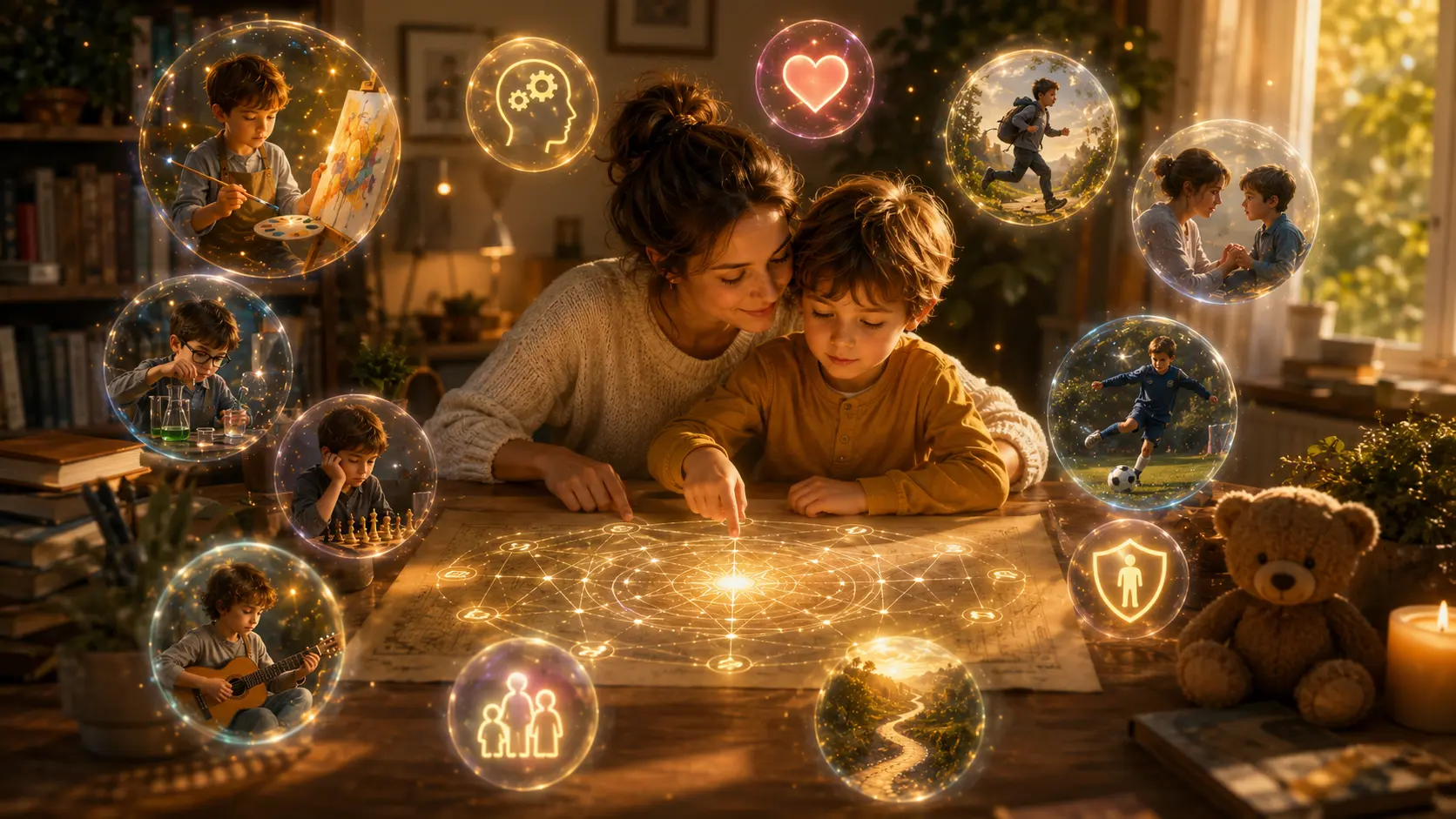
Now that you understand the framework, here is how to apply it in daily parenting.
Match activities to energy, not expectations. Look at your child’s talent zones and center number before signing them up for activities. A child with strong creative energy will light up in art, music, or theater. A child with analytical energy might thrive in coding, chess, or science experiments. Follow the energy, not the trend.
Adjust your communication style to their arcana. A child with Arcana 2 (The High Priestess) energy needs quiet presence and a safe space to process feelings internally. A child with Arcana 6 (The Lovers) energy needs verbal reassurance and physical affection. A child with Arcana 7 (The Chariot) energy needs acknowledgment of their achievements and clear goals to work toward.
Prepare for karmic tail triggers. If you know your child’s karmic tail energy, you can anticipate difficult phases before they arrive. If their tail includes transformation energy, prepare them for transitions with extra time and conversation. If it includes authority energy, watch for power struggles during adolescence and find healthy ways to channel that intensity.
Revisit the chart at different developmental stages. A chart reading that made sense when your child was 5 will look different when they are 12 and different again at 16. The numbers do not change, but the way those energies express themselves will evolve as your child grows. Make it a practice to return to the chart every few years with fresh eyes.
Use it to understand, not to control. The destiny matrix is a parenting support tool, not a management system. Your child is not a project to be optimized. They are a person to be understood. The chart helps you understand. What you do with that understanding is up to you.
If you are exploring your own chart alongside your child’s, understanding your life purpose and how it interacts with your parenting style can add another useful layer of insight.
Final Thought
Calculating a child’s destiny matrix takes the same steps as any other chart. The numbers are derived from the birth date, placed on the octagram, and reduced to fit between 1 and 22. Nothing about the math changes.
What changes is the intention behind the reading. For adults, the matrix reveals patterns you have been living with for years. For children, it reveals patterns that are just beginning to form. And that difference is everything, because with a child, you still have the chance to nurture the strengths before life buries them and address the vulnerabilities before they become fixed.
That is not prediction. That is parenting with more information. And any tool that helps you see your child more clearly for who they are, rather than who you assume them to be, is a tool worth using.